
 HOME
HOME 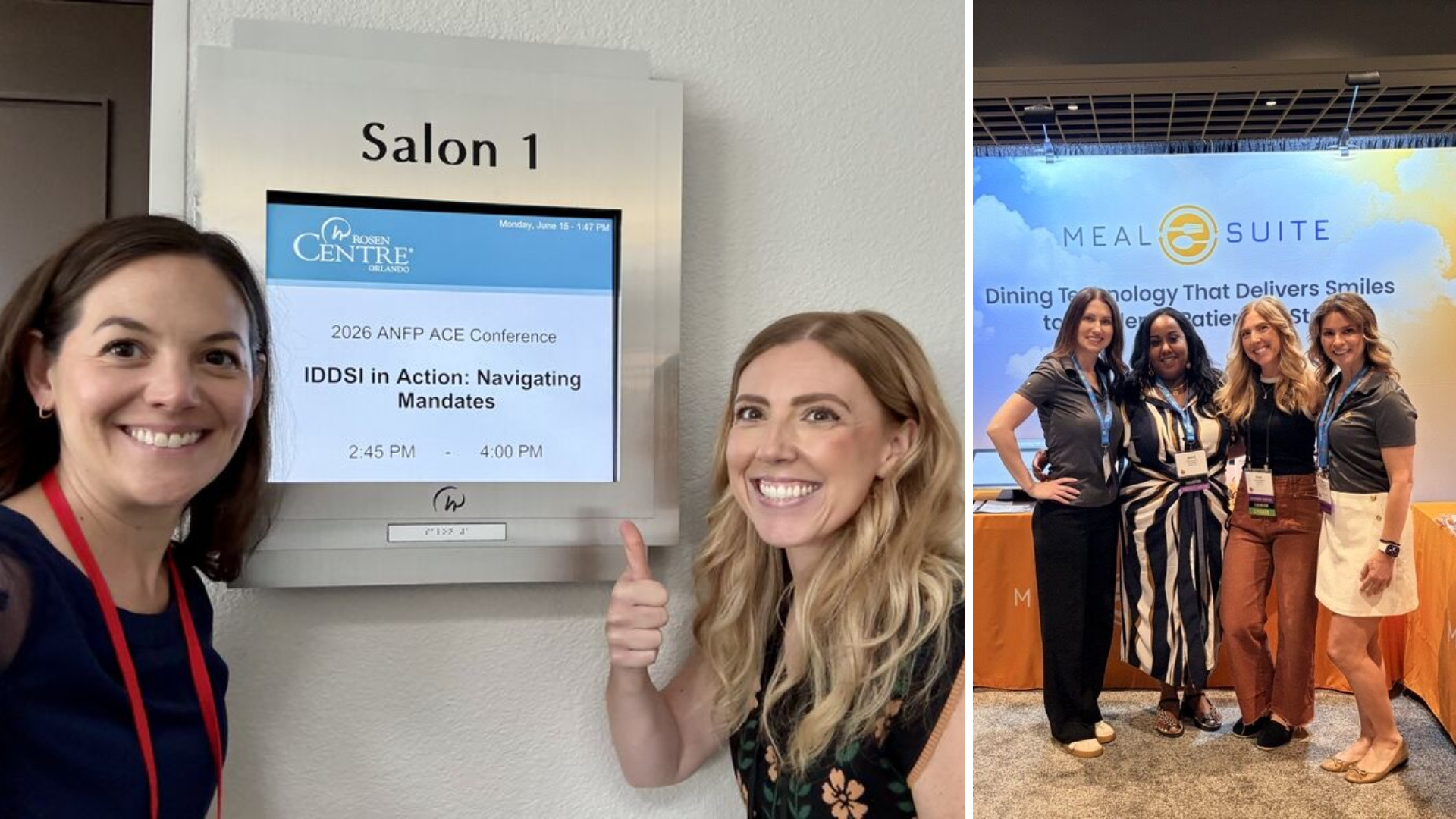
IDDSI Mandates at ANFP ACE: Here's Everything We Covered

By Noel Slaughter, RD, Director of Nutrition Services at MealSuite
Connect with me on LinkedIn!Orlando was everything I hoped it would be.
The energy at ANFP ACE this year was genuinely electric. Foodservice and nutrition leaders from across the country packed into sessions, crowded hallway conversations and brought a hunger to learn that I find so motivating. Being around people who care this much about the work – it fills my cup every time.
I had the honor of co-presenting a breakout session called IDDSI in Action: Navigating Mandates, Mobilizing Teams and Moving Forward alongside my RD colleague Emily LaStarza, MS, RD, CSG, LDN from CCL Hospitality Group. I'm not sure what I expected, but I was blown away. The room was full, people were taking photos of the slides and hands kept going up.
That response tells me something important: this topic is urgent, and folks need practical and realistic guidance.
So, for those of you who were in the room – thank you. Your engagement made that session come alive! And for those who couldn't make it, I want to share what we covered.
Why IDDSI Matters More Than Ever
I have been involved with IDDSI for over four years as a member of the International Reference Group and now as an LTC IDDSI Chair. I've watched this framework move from something clinicians were curious about to something many surveyors expect.
Here's the short version of where we are: In October 2021, both the Academy of Nutrition and Dietetics and the American Speech-Language-Hearing Association (ASHA) formally endorsed IDDSI as the only recognized texture-modified diet framework in the U.S. That same year, the National Dysphagia Diet was declared obsolete. NDD wasn't wrong when we used it – it was the best we had at the time, but now we know better.
More than five years have passed since IDDSI became the gold standard. That means surveyors are not just aware of it; they expect it. And communities still using NDD framework – or a mix of both – are going to be at risk.
People with dysphagia are among the most vulnerable residents in our care. Getting their texture right, every meal, every day, is one of the most direct ways we protect their health and their quality of life. After all, aspiration pneumonia is one of the leading causes of hospitalization and preventable deaths in long-term care.
What Surveyors Are Looking For
One of the things Emily and I spent real time on in our session was regulatory exposure – because it's important to understand what's at stake.
Surveyors are not just reading your paperwork. They may watch the tray line, they may pull recipes and they will talk to your frontline staff.
Some of the questions your staff should be ready to answer:
- "How do you know the food is the correct texture?"
- "Show me how you test a Level 4."
- "What is the difference between a Level 5 and Level 6?"
- "How do you document failed texture tests?"
That last question is one I love, because communities sometimes worry about documenting failures. But a well-documented failed test actually shows a culture of accountability. It means your process is working, and surveyors want to see that.
The most common citation risk we see is documentation inconsistency. The diet order in the EHR says one thing, and the care plan uses different language. The tray ticket says something else. Even if the food on the tray is correct, that paper trail inconsistency is citable. It tells surveyors the system is not reliable – and that's ultimately what they're there to evaluate.
The relevant F-tags we walked through included F658 (services meeting professional standards), F800 and F805 (diet meeting individual needs) and F692 (nutrition and hydration status). These are not minor findings. They carry real consequences for communities that are not aligned.
Implementation Is a Team Sport
One of my favorite parts of presenting with Emily is that she brings a strong operational lens alongside my clinical one. Together we spent time helping attendees think about what it actually takes to build IDDSI compliance – not just understand it.
The biggest message: you cannot do this alone.
A true IDDSI champion team includes people from foodservice (your manager, RD and chef), the care team (your SLP, nursing and medical providers) and supporting roles that often get overlooked – IT and EHR teams, compliance leads and even your vendors and suppliers.
That is also why we are building Thrive Nutrition by MealSuite. Launching this fall, Thrive integrates local, tech-enabled registered dietitians directly into your operation – working alongside your team to support compliance, manage diets and textures in one place and reduce administrative load.
If that sounds like the kind of support your team needs, you can learn more and join the waitlist at the link above.
The IT piece is one I really want to call out. If your EHR still has NDD terms in the diet order picklist, you are going to have documentation problems. It doesn't matter how well your staff are trained – if the system offers "Mechanical Soft" as an option, someone will use it. Getting your EHR updated to reflect IDDSI terminology is foundational – and it takes time, so start early!
We also talked through the crosswalk from NDD to IDDSI, because that is often where teams get stuck. The good news is that some levels map closely – NDD Level 1 Puree to IDDSI Level 4 Pureed, for example. But others, like NDD Level 2 Ground, have been interpreted so inconsistently across the industry that you can't assume alignment. You have to test. Use the standardized IDDSI audit tools, track every result and don't skip items just because you think they are probably fine.
Training Has to Be Ongoing
I hear from a lot of teams who did a big IDDSI rollout and then moved on. And then six months later things start to drift: Staff turn over, shortcuts creeping in, new products that no one has tested.
Training is not a one-time event. It's a system.
Every new hire who touches food or resident care needs IDDSI training before they work independently – not just kitchen staff. Nursing aides who assist at meals need to understand diet levels and know how to flag a concern. That knowledge has to be institutional, not just binder-deep.
Return demonstrations are the gold standard for competency. Have staff actually perform the spoon tilt test, the fork pressure test or the flow test in front of a trainer and document it. That is the only way you truly know they can do it – not just that they sat through a session.
And when you embed IDDSI into your QAPI program, the whole thing becomes sustainable. You have trackable data. You can catch drift before it becomes a citation. You have documentation that tells a surveyor, here is how we monitor this, here is what we found and here is what we did about it. That is a very different conversation than scrambling to explain a deficiency.
The Menu Strategies That Can Make or Break Your Transition
Your champion team and your documentation can all be aligned – but if your menus aren't, you still have a gap.
Menu strategy for IDDSI means thinking through diet levels, budget, equipment availability and whether you will prepare items in-house or purchase them. Don't underestimate the scope – a 6-week rotating menu with just four texture levels can mean 500-plus standardized recipes to manage. Keep it as simple as you can.
A few practical things we have seen trip teams up. Strain your vegetables – unstrained items at Level MM5 will weep liquid and fail testing. Don't assume proteins will carry through all texture levels – they often don't. And never alter the framework to make something work. Serving bread on an MM5 tray defeats the purpose of IDDSI, creates confusion and is a potential citation risk.
On documentation: the number one lesson we see play out again and again is terminology misalignment. The EHR says "IDDSI Level 5." The care plan says "Minced Soft." The tray ticket says "Minced." Even if the food is correct, that inconsistency is citable. Every link in that chain has to say the same thing.
And finally – don't underestimate transition time. The average IDDSI transition takes six months. A phased approach works best: start with fluids, then move to Pureed Level 4, then work through remaining levels one at a time.
A Room Full of People Who Care
I want to come back to where I started, because it genuinely matters to me.
The people in that session were not there because they had to be, they were there because they want to do right by the people in their care.
That energy is why I do this. IDDSI is not just a regulatory framework to me – it's a commitment to safety and dignity for people who are often the most vulnerable. Every meal that reaches the right person at the right texture is a small act of care that matters.
Thank you to every person who came to that session. You made it better just by being there.
Get Our Free IDDSI Transition Toolkit
If you are in the middle of your IDDSI transition – or you know you need to start – we built something to help.
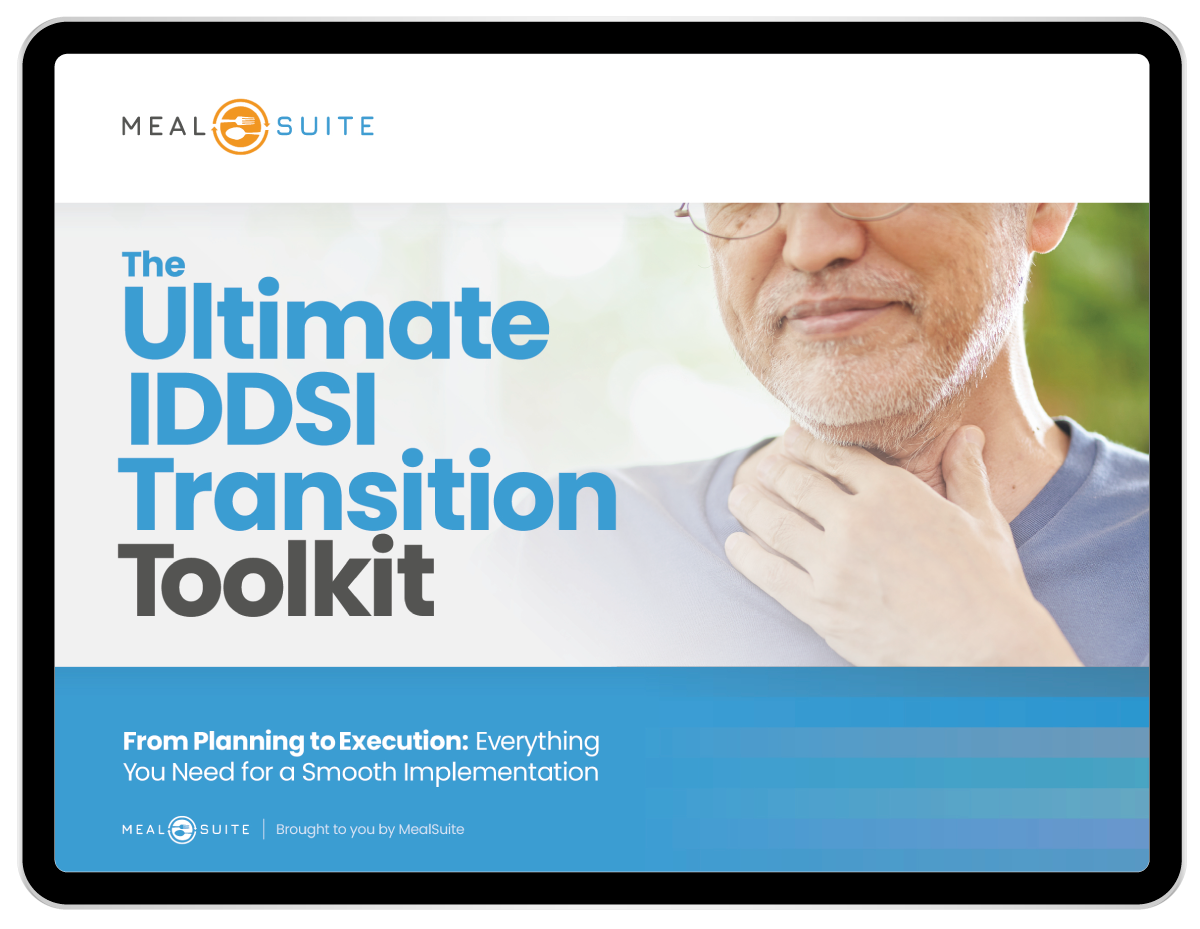
MealSuite's IDDSI Transition Toolkit is free and gives you the practical, operational tools to move forward with confidence: audit frameworks, crosswalk guides, documentation templates and more.
You don't have to figure this out from scratch. Let's get your team moving forward.