
 HOME
HOME Who we serve
Resouces
- Complimentary Downloads
- Blog
- Success Stories
- Calculators
- Ultimate IDDSI Toolkit New
- Press Room
- Events
- FAQ
Products
Who we are
TF 800-383-1999
(Select #1 for Sales)P 972-238-7200 | F 972-238-7733
Who we serve
Resouces
Products
Who we are
P 972-238-7200 | F 972-238-7733
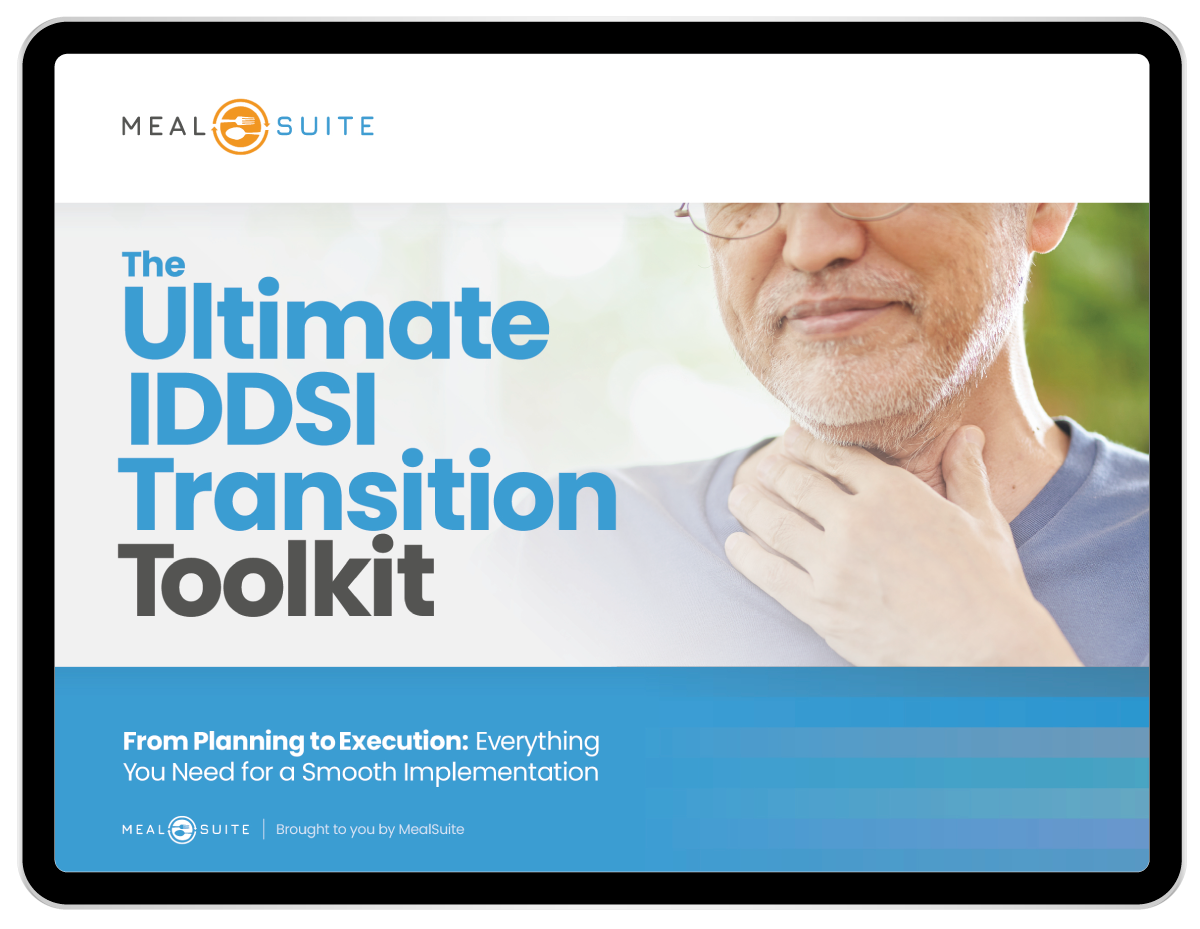
Looking at switching to or furthering your International Dysphagia Diet Standardisation Initiative (IDDSI) implementation, but don't know where to start? Let's make it as simple as possible for you!

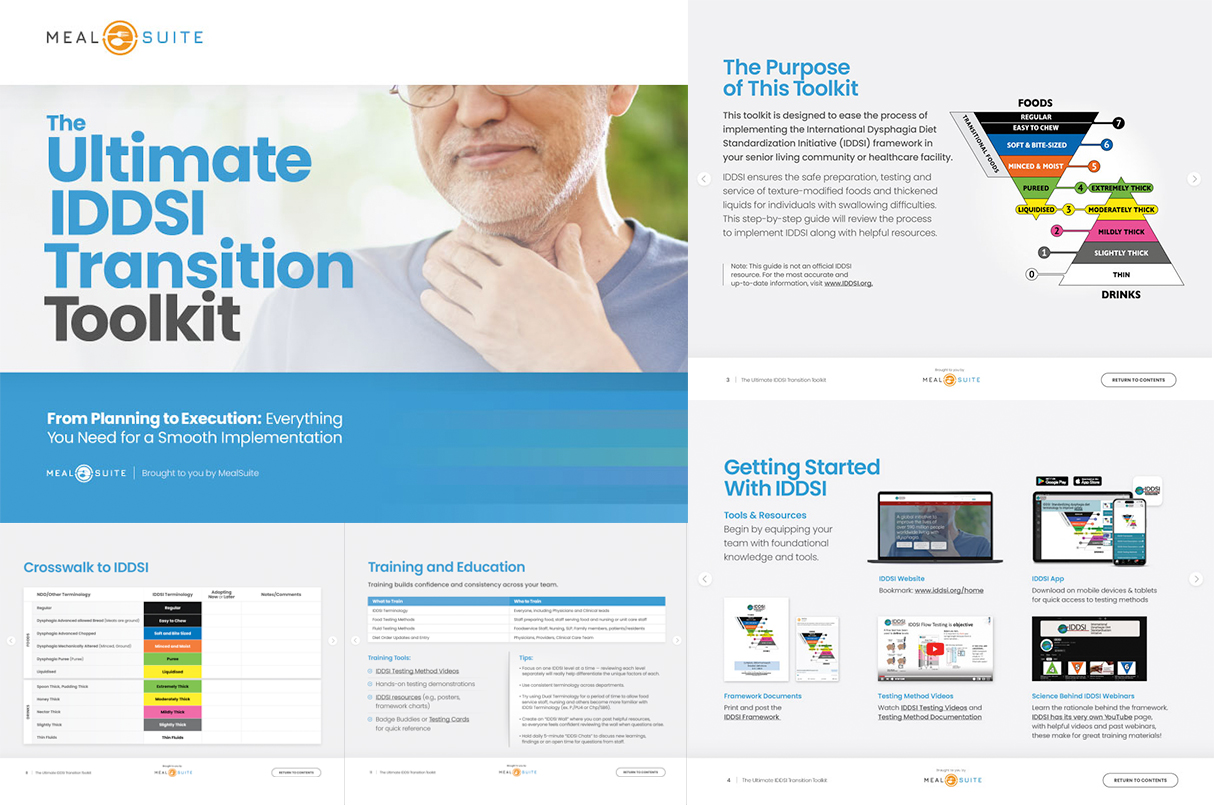
This toolkit, created by Registered Dietitians specializing in IDDSI standards, includes 18 pages of clear steps, practical tips and essential resources for implementing IDDSI:
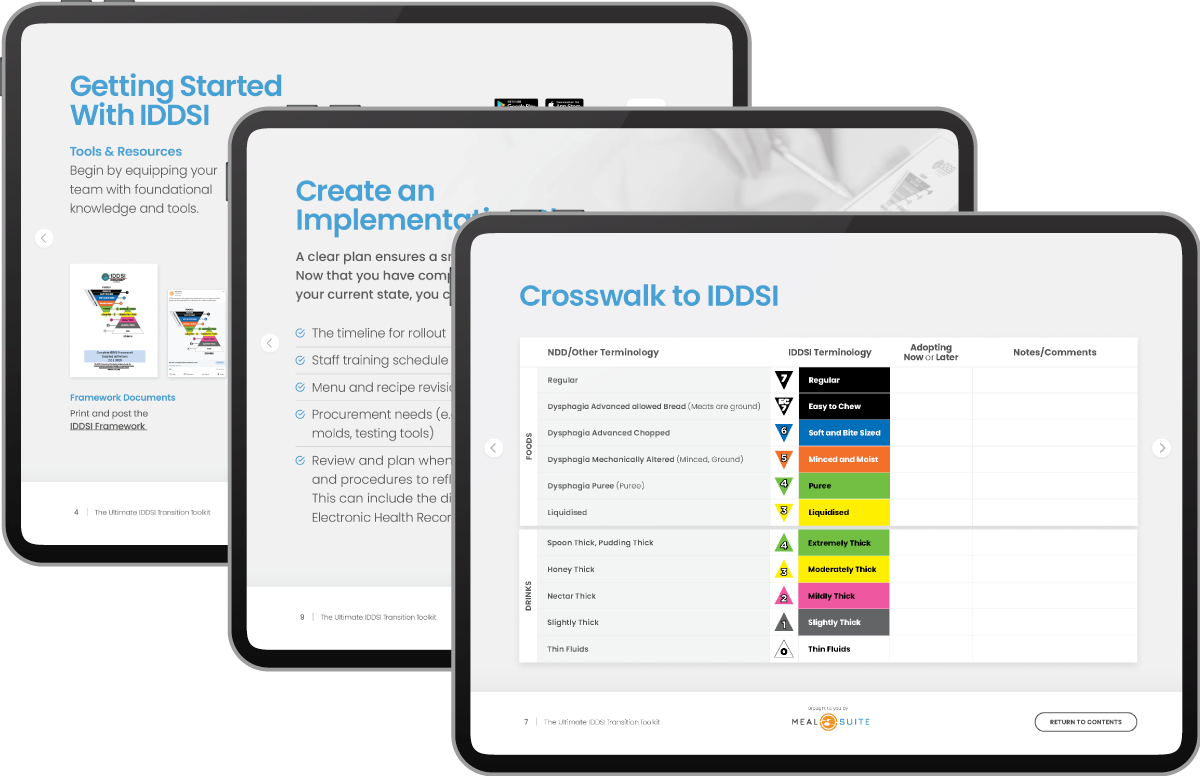
Since its release in 2015, the IDDSI Framework has provided globally recognized guidelines for safe, standardized diets for those with swallowing difficulties. These standards ensure consistency and safety across care settings, improving quality of life.
As a foodservice professional in senior living or healthcare, we know providing safe, quality care to your diners is your number one priority.
This resource hub is here to help your team succeed, with practical tools and guidance for smooth implementation and ongoing compliance.
Watch our on-demand webinar for a clear, practical roadmap for compliance. Global IDDSI Co-Chair Luis Riquelme and IDDSI LTC Chair & US Best Practices Member Noel Slaughter break down what surveyors look for, how to avoid citations and the steps you can take now to stay ahead.
Gain insider insights right from the leaders who have a pulse on the industry – so you can confidently prepare your team and stay compliant as enforcement expands.

The International Dysphagia Diet Standardisation Initiative (IDDSI) was created to solve a critical problem: inconsistent texture standards that can lead to safety risks for individuals with swallowing difficulties.
Dysphagia affects 10-33% of older adults
Source: NIHBy providing clear, globally aligned guidelines, IDDSI improves patient and resident safety, supports staff training and ensures operational consistency across care settings. Its adoption is transforming how senior living and healthcare providers approach dysphagia diet standards, making it an essential framework for quality care.
Discover how to help residents accept texture-modified diet changes.
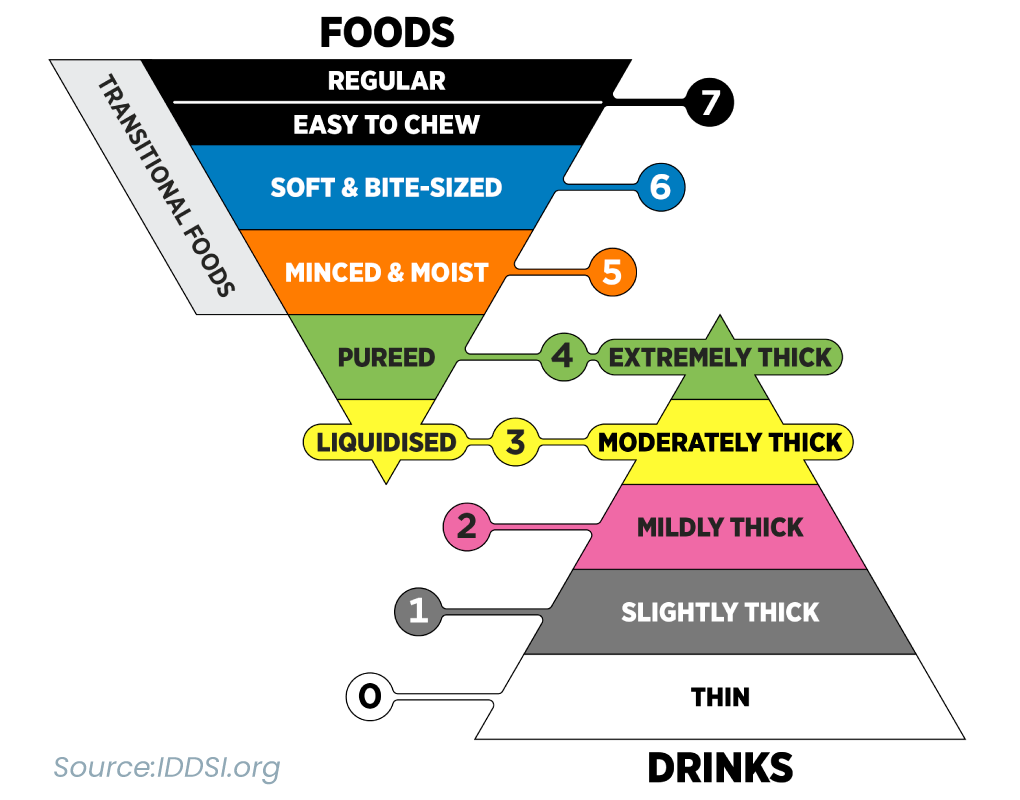
There are 8 different IDDSI Levels, where liquids are measured from Levels 0-4 and foods are measured from Levels 3-7.
The IDDSI Liquid Levels are: Thin (Level 0), Slightly Thick (Level 1), Mildly Thick (Level 2), Moderately Thick (Level 3) and Extremely Thick (Level 4).
The IDDSI Food Textures are: Liquidised (Level 3), Pureed (Level 4), Minced & Moist (Level 5), Soft & Bite Size (Level 6) and Easy to Chew (Level 7).
Not all communities will offer all levels, depending on the population and needs of their patients or residents.
IDDSI food lists are guides and not exhaustive rulebooks. They help classify foods by texture level and include:
You can download these free handouts under Consumer Resources on the IDDSI website.
Important:
Pro Tip: Start with the "Foods to Avoid" section, then review the criteria and rationale for each level.
Introduced in 2018, EC7 was created for individuals who don't have dysphagia but benefit from softer foods.
What EC7 Includes:
How It Differs:
Why It Matters: EC7 helps reduce eating effort while keeping meals familiar and enjoyable.
Consistency is critical. IDDSI recommends a three-step testing process to validate textures before serving:
Spoon Tilt Test:
Ensures food holds shape but slides off easily.
Fork Drip Test:
Checks particle size and moisture for solids.
Flow Test:
Measures liquid thickness using a syringe.
Why test regularly? Even small variations in preparation can affect safety. Routine checks ensure compliance and protect residents.


Assessment

Training

Rollout
Discover “go-live” resources and tips for a successful rollout.

Evaluation
Once you understand the ‘why’ and ‘how’ behind implementing IDDSI standards, the next step is putting that knowledge into action! That’s where our Ultimate IDDSI Transition Toolkit comes in: a comprehensive resource designed to guide your team through every stage of implementation.
Before you begin your own implementation journey, we encourage you to dowanload the toolkit and give your team the confidence and clarity they need to succeed.
RELATED RESOURCE
Watch Calming 5 Common IDDSI Fears: Navigating the Solutions for Sustainable Implementation
And don’t forget to pay a visit to IDDSI.org, where you’ll find:
Plus, don’t forget to check out the IDDSI YouTube channel for handy explainer videos.
Foodservice software can play a key role in supporting IDDSI implementation by streamlining menu planning, recipe management and texture modifications.
With built-in compliance tools and IDDSI tags, teams can ensure consistency across meals while reducing manual errors. This technology helps simplify training and quality checks, making the transition to IDDSI standards more efficient and reliable.

Supporting resident diet changes under IDDSI requires balancing safety with personalization. While the framework provides clear guidelines for texture modified diets, individual tolerances – such as bread or transitional foods – should be assessed by the Speech Therapist and tailored by the interdisciplinary team. Solutions like MealSuite’s soaked bread recipes and IDDSI-safe dessert substitutes help facilities maintain variety and enjoyment while meeting compliance standards.
By molding foods into familiar shapes, adding color contrast and serving on attractive dishware, you can transform the dining experience from clinical to inviting. These simple steps not only enhance visual appeal but also help maintain dignity and enjoyment for residents who require texture modified diets.
A safe, standardized approach to dysphagia diets isn’t just best practice – it’s essential for providing safe service to your residents and ensuring consistency across your team. By implementing IDDSI standards, you’re taking a proactive step toward better safety, quality and confidence in every meal.
Take the next step today:
Download Your IDDSI Transition Toolkit Watch the IDDSI Enforcement Webinar

Learn How MealSuite’s Foodservice Management Software Can Support Your IDDSI Implementation